Smaller incisions and a quicker return home make minimally invasive spine surgery sound like the obvious choice. Yet the most important question is not how small the incision can be. It is whether surgery is the right step for you at all, and if so, whether your condition is well suited to a less invasive approach. Here is how we decide when minimally invasive spine surgery makes sense for you in Sterling.
The Same Starting Point as Any Spine Surgery
Minimally invasive spine surgery is held to the same standard as traditional open surgery. It is usually recommended only when a period of nonsurgical care, such as medication and physical therapy, has not relieved your symptoms, and only when the exact source of your pain can be identified, such as a herniated disc or spinal stenosis.1
That means the decision begins with diagnosis, not technique. A clear match between your symptoms, your exam, and your imaging is what makes any operation worth considering. If that match is missing, a smaller incision does not make surgery a better idea.
Signs That Surgery May Be Worth Discussing
For a herniated disc in the lower back, surgery is typically considered when nonsurgical treatment has not helped or when you develop muscle weakness, difficulty walking, or loss of bladder or bowel control.2 Timing matters as well. Waiting too long can limit improvement, and studies suggest outcomes at around 9 to 12 months are not as good as when surgery is done before 9 months.2
For lumbar spinal stenosis, surgery is generally reserved for pain and weakness that seriously affect your quality of life, including trouble walking for extended periods.3 In each case, the goal is to relieve a problem that conservative care has not been able to fix.
Conditions Often Treated With a Minimally Invasive Approach
Several common procedures can be performed through smaller openings. A minimally invasive lumbar discectomy removes disc material pressing on a nerve root and is used for nerve compression from a ruptured disc. Minimally invasive techniques can also be used for decompression,1 and lumbar decompression relieves pressure from a herniated disc, spinal stenosis, or bone spurs when conservative treatment has not provided relief.
When a segment of the spine is unstable, fusion may be needed. A minimally invasive TLIF is one option for degenerative disc disease, stenosis, and spondylolisthesis when rest, therapy, and medication have not relieved back and leg pain. In the neck, a minimally invasive cervical discectomy is recommended only after nonsurgical treatment has failed.
How Minimally Invasive Surgery Differs
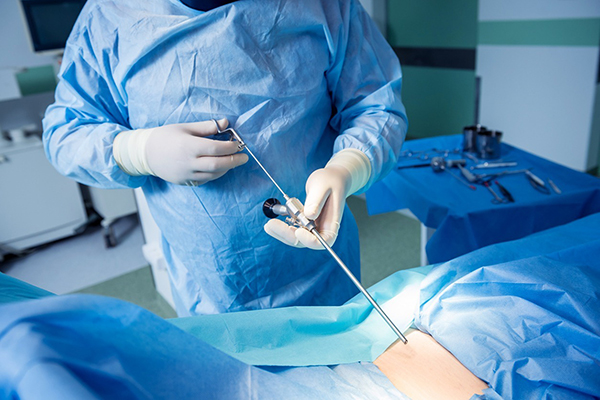
Minimally invasive spine surgery uses small incisions, often less than an inch long, along with tubular retractors, specialized instruments, and advanced imaging to reach the spine. The retractor holds muscles aside instead of cutting them, which limits damage to surrounding tissue.1
Research supports some meaningful differences. A meta-analysis of 11 studies including 785 participants found that minimally invasive TLIF was associated with less blood loss and a hospital stay about 2.7 days shorter than open TLIF, with similar complication and reoperation rates.4 The same analysis found more X-ray exposure during the minimally invasive procedure.4 Many minimally invasive procedures allow you to go home the same day or within 1 to 2 days.1
When Another Approach May Fit Better
A minimally invasive approach is not right for every spine. Whether a smaller incision is possible depends on your diagnosis, your anatomy, and the number of levels being treated. Some operations require more than one incision or retractor.1 In other cases, robotic spine surgery can support planning and implant placement during either an open or a minimally invasive procedure.
It also helps to keep expectations realistic. Even when comfort improves quickly after a fusion, it may take several months for the bone to become solid.1 Your recovery plan will reflect the specific operation, not only the size of the incision.
Frequently Asked Questions
Who is a good candidate for minimally invasive spine surgery?
You may be a good candidate if nonsurgical treatment has not relieved your symptoms and imaging confirms a specific source, such as a herniated disc or spinal stenosis.1 Your anatomy and the number of levels involved also shape the decision.
Is minimally invasive spine surgery safer than open surgery?
It is not risk free, but it may cause less muscle damage and blood loss. Possible complications include infection, bleeding, nerve injury, and recurring symptoms, similar to open surgery.1
How soon can you go home after minimally invasive spine surgery?
Many minimally invasive procedures allow you to go home the same day or within 1 to 2 days, depending on the operation and your health.1
Can every spine condition be treated with minimally invasive surgery?
No, some conditions and anatomies are better suited to an open approach. A thorough evaluation determines which technique fits your situation.
Where can you get minimally invasive spine surgery in Sterling?
You can be evaluated for minimally invasive spine surgery at our Sterling office at 21351 Gentry Drive, Suite 125. We also offer evaluations at our Annandale office on Backlick Road.
Deciding on the Right Approach for Your Spine in Sterling
The right time for minimally invasive spine surgery comes when the diagnosis is clear, conservative care has run its course, and your condition suits a smaller approach. If you want to know whether that describes your situation, you can arrange an evaluation at our Sterling or Annandale office.
References
- American Academy of Orthopaedic Surgeons. Minimally Invasive Spine Surgery. OrthoInfo. https://www.orthoinfo.org/bodypart/back/minimally-invasive-spine-surgery/
- American Academy of Orthopaedic Surgeons. Herniated Disk in the Lower Back. OrthoInfo. https://www.orthoinfo.org/bodypart/back/herniated-disk-in-the-lower-back/
- American Academy of Orthopaedic Surgeons. Lumbar Spinal Stenosis. OrthoInfo. https://www.orthoinfo.org/bodypart/back/lumbar-spinal-stenosis/
- Tian NF, Wu YS, Zhang XL, Xu HZ, Chi YL, Mao FM. Minimally invasive versus open transforaminal lumbar interbody fusion: a meta-analysis based on the current evidence. European Spine Journal. 2013;22(8):1741-1749. https://pmc.ncbi.nlm.nih.gov/articles/PMC3731475/
About
Mark Shasti, MD is a board certified orthopedic spine surgeon with fellowship training in advanced spine surgery and specialized nonsurgical care. He is proficient in the management of all spinal pathologies, specifically cervical and lumbar degenerative diseases, adult and pediatric scoliosis, infection, trauma, and tumors. Dr. Shasti also performs complex procedures, cervical disc arthroplasty (artificial disc) procedures and minimally invasive lumbar surgeries.