Precision matters in spine surgery. Screws, cages, and other implants have to sit in a planned trajectory, close to nerves and in bone that may already be narrow or worn. Robotic spine surgery gives the surgeon computer-guided assistance for that planning and placement. For selected patients at Nova Spine Center in Annandale, the potential benefits include a detailed preoperative blueprint, accurate implant position, and, in many cases, less intraoperative X-ray exposure. The robot supports the surgeon. It does not operate independently, and it is not the right tool for every spinal condition.
What Is Robotic Spine Surgery?
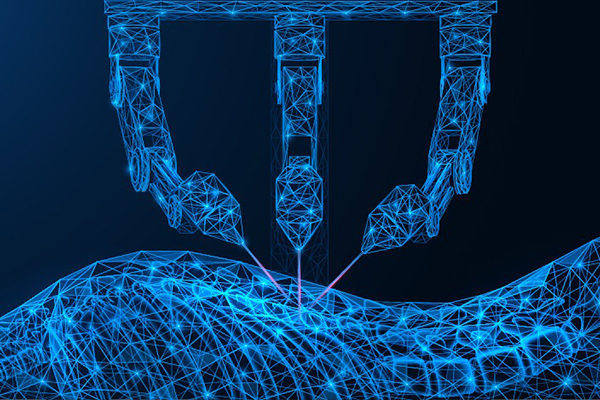
Robotic spine surgery is an assisted procedure. Your surgeon remains in control of every step. A typical system includes a workstation with planning software, a mounting platform attached to the spine, and a guidance unit that helps place instruments along a planned path.
The work usually follows four phases:
- Preoperative planning. A CT scan is uploaded to the workstation to build a 3D model of your spine. The surgeon maps implant size and placement and can identify anatomic challenges such as asymmetry or poorly formed vertebrae before the incision.
- Mounting. A platform is rigidly attached to the spine so the plan stays accurate even if the patient moves slightly.
- Registration. Live X-ray images taken in the operating room are matched to the preoperative CT so the blueprint and the real anatomy line up, vertebra by vertebra.
- Instrumentation. The guidance unit is set to the planned trajectory so instruments and implants can be placed at the intended location. The process is repeated for each targeted level.
Robotic assistance can be used with an open incision or with a minimally invasive approach. The technology does not decide whether you need surgery. Diagnosis and judgment still come first.
Benefit 1: A Clearer Surgical Plan Before the Incision
One of the main advantages is time spent planning, not improvising. The 3D model lets the surgeon choose implant size, entry point, and trajectory while looking at axial, lateral, and front-to-back views of your spine. That matters when anatomy is not textbook, when a previous operation has changed the landmarks, or when several levels need instrumentation.
A written, image-based plan does not replace the ability to adjust in the operating room. It does mean more of the decision-making can happen when there is time to study the scans, not only after the incision is open.
Benefit 2: More Accurate Placement of Instruments and Implants
Pedicle screws and other implants have a small safe corridor. A few millimeters off the plan can mean a weaker hold in bone or proximity to a nerve. Robotic guidance is designed to help the surgeon reproduce the planned trajectory at each level.
Greater accuracy can support the mechanical goal of the operation, whether that is decompression, fusion, or stabilization for spondylolisthesis or deformity. Accuracy is a benefit of the tool. It is not a guarantee of a perfect outcome, and it does not remove the usual risks of spine surgery, including infection, bleeding, and nerve injury.
Benefit 3: The Option to Combine Robotics With a Smaller Incision
For some patients, robotic guidance and minimally invasive technique are used together. The robot helps with trajectory. The smaller incision aims to spare muscle. That combination may mean less tissue disruption and a recovery path closer to other minimally invasive procedures, with the added planning detail of the robotic workflow.
Not every robotic case is minimally invasive, and not every minimally invasive case uses a robot. Your surgeon will match the tools to the diagnosis, the spinal levels involved, and your overall health.
Benefit 4: Potentially Less X-ray Exposure in the Operating Room
Conventional instrumentation often relies on repeated fluoroscopy to check screw position. Because much of the trajectory is planned on the preoperative CT and then registered, robotic cases may require fewer live X-ray shots once the system is synced. Reduced radiation is a commonly cited benefit for both the patient and the operating-room team. The amount of imaging still depends on the case, and fluoroscopy is still used to register the plan.
Benefit 5: A Technology That Supports, Not Replaces, the Surgeon
Patients sometimes worry that “robotic surgery” means a machine is operating. In this setting it does not. Dr. Shasti uses the system as a guidance and planning aid. He still chooses the procedure, still works around nerves, and still decides if the plan needs to change once the anatomy is in view.
That distinction matters for people comparing options in Annandale. The benefit is a more reproducible, image-based way to place hardware. The responsibility and the skill remain the surgeon's.
Who May Benefit, and Who May Not
Robotic assistance is most often discussed when implants must be placed precisely, such as in fusion or deformity work, or when a minimally invasive corridor leaves the surgeon with less direct visibility. It may not add value for every decompression, and it may not be available or appropriate for every anatomy or revision.
As with any spine operation, candidacy starts with a clear structural diagnosis.
Persistent back pain, stenosis, disc herniation, or radiculopathy still need imaging and a neurological exam before any technology is chosen. Conservative care remains first-line when it can reasonably control symptoms.
Frequently Asked Questions About Robotic Spine Surgery in Annandale
Does the robot perform the surgery?
No. The system helps with planning and guides instrument trajectory. The surgeon performs the operation and can modify the plan if the anatomy requires it.
Is robotic spine surgery safer than traditional surgery?
Robotic assistance can improve the accuracy of implant placement and may reduce some technical risks related to trajectory. Every spine operation still has risks, including infection, bleeding, and nerve injury. Safer for one patient is not automatic for every patient.
Can robotic surgery be minimally invasive?
Yes. Robotic guidance can be used during open or minimally invasive procedures. Whether a smaller incision is possible depends on the diagnosis and the levels being treated.
Will I recover faster because a robot is used?
Recovery is driven mainly by the procedure (for example, decompression versus fusion) and by your health, not by the brand of guidance system. If robotics allows a less disruptive approach and more accurate hardware, that may support recovery. It is not a shortcut around bone healing or physical therapy.
How do I find out if robotic spine surgery in Annandale is right for me?
A consultation with a fellowship-trained spine surgeon is the way to find out. Bring prior imaging if you have it. The evaluation will cover diagnosis, nonsurgical options, and whether robotic assistance would add something useful to your specific operation.
Ask Whether the Technology Fits Your Operation
The top benefits of robotic spine surgery are better preoperative planning, more accurate implant placement, the option to pair guidance with a smaller incision, and, in many cases, less live X-ray once the case is registered. Those advantages only matter if they serve the operation you actually need. If neck or back symptoms are still limiting your life in Annandale, an evaluation can determine whether robotic-assisted surgery is part of a sound plan, or whether another approach is a better fit.
Mark Shasti, MD is a board certified orthopedic spine surgeon with fellowship training in advanced spine surgery and specialized nonsurgical care. He is proficient in the management of all spinal pathologies, specifically cervical and lumbar degenerative diseases, adult and pediatric scoliosis, infection, trauma, and tumors. Dr. Shasti also performs complex procedures, cervical disc arthroplasty (artificial disc) procedures and minimally invasive lumbar surgeries.